
Originally published on the United States Environmental Protection Agency website on November 13, 2025.
Alaska, the largest and least densely populated U.S. state, faces unique challenges in waste management, including battery disposal. Rugged terrain and permanent snow and ice limit ground transport, and many remote communities, including Alaska Native Villages, rely on costly and infrequent barge and air shipments. Landlocked communities cannot use boat transport.
The Backhaul Alaska Program (pdf)(284 KB) addresses these challenges by connecting rural communities with waste collectors through partnerships with regional and commercial environmental groups. Backhauling involves transporting hazardous waste from origin communities to recycling or disposal destinations and is a widely used method in Alaska. The program sets up an extensive backhauling network across the state.
Backhaul Alaska offers convenient options for managing difficult materials like batteries and electronic waste. The program focuses on lead-acid batteries often found in all-terrain vehicle and snowmachines, due to the environmental and health risks from acid leaks. Backhaul Alaska also accepts household batteries, including alkaline, carbon-zinc, nickel, and lithium.
According to Backhaul Alaska's 2024 Annual Report (pdf)(55.9 MB), from 2018 through 2024, Backhaul Alaska served 97 communities in 11 Alaska regions, successfully backhauling over 275 tons of waste in 2024, including over 60 tons of battery waste and 76 tons of electronic waste. In 2024, the program also provided comprehensive backhaul and U.S. Department of Transportation Hazardous Materials Regulation training to 112 trainees over eight three-day sessions.
Senator Lisa Murkowski and other Alaskans devised Backhaul Alaska to tackle waste and hazardous material accumulation across the state. The Solid Waste Alaska Taskforce oversees the program and includes senior waste experts from:
The Solid Waste Alaska Taskforce convened with interested parties across Alaska to determine the area's needs and frame a system that could work for rural communities. The Taskforce incorporated these ideas into a draft pilot plan, published in 2016 with funding from U.S. EPA.
The pilot program ran from February 2018 to December 2021, demonstrating the need for large-scale rural waste collection in Alaska using a hub-and-spoke model. In this model, a central "control tower" in Anchorage directs and organizes waste collection across the state. For instance, a small community may send electronic waste to Nome, where partner Kawerak transports the waste by barge or air (via Alaska Air Cargo) to Anchorage. There, Alaskan vendor Central Recycling Services combines it with other waste for processing or consolidation in large metal cargo containers provided by Matson for shipping down to Seattle.
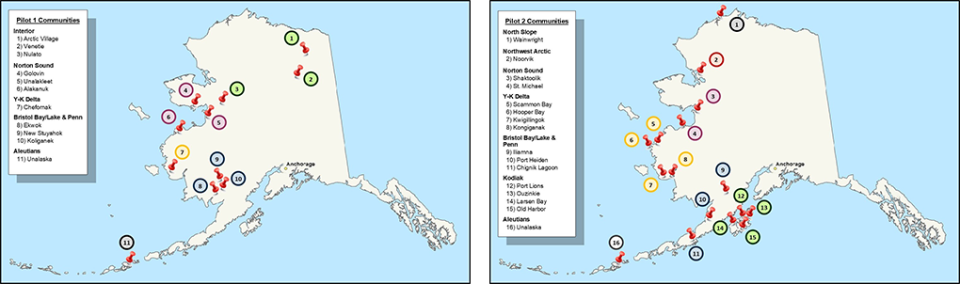
Backhaul Alaska served 10 communities in its first pilot program stage and 16 in its second. Coordinators strategically limited waste types, community numbers, and scope to build momentum and identify improvement areas. Since 2020, Backhaul Alaska has expanded from three to nine waste types and from 26 to nearly 100 communities, supported by five to six full-time employees and additional part-time help.
Backhaul Alaska collaborates with local and regional organizations to reach communities across the state, each bringing unique expertise and partnerships to enhance backhauling and collection access. Key partnerships include:

Backhaul Alaska's primary training program is a three-day in-person Uniform Backhaul Training event in Anchorage, which fulfills the program's training requirements. Given the involvement of hazardous materials in backhauling operations, the training includes U.S. Department of Transportation Hazardous Materials Regulations sessions. These cover federal hazardous materials handling practices applicable to work with Backhaul Alaska and beyond. Hazardous Materials Regulation training topics include safety measures specific to battery and mercury spills, as well as general subjects like personal protective equipment, lifting, loading, storage, and labeling.
Backhaul Alaska's primary challenge is the rural and often roadless transportation system in Alaska. Most communities served by the program are inaccessible by road and rely on barge or air transport, which involves additional costs, regulations, and safety concerns for hazardous waste shipments. Backhaul Alaska addresses these issues by partnering with specialized transportation services like Alaska Air Cargo.
Another significant challenge is job turnover. Life in rural Alaska can be difficult, leading to frequent relocations and hindering organization and communication as regional contacts change. To combat this, Backhaul Alaska conducts frequent, recurring annual training programs for new employees to maintain continuity and effectiveness.
Backhaul Alaska's success and expansion during its full implementation stage have made it a household name in the state. The organizers are eager to increase the number of communities served and enhance services for existing customers by providing more pickup points, trainings, collection materials, and packaging kits. The success of the Alaska Air Cargo electronic waste ballast program serves as a model for future partnerships, as more local corporations and organizations prioritize environmental stewardship. By highlighting battery and electronic waste recycling, Backhaul Alaska aims to demonstrate that recycling is achievable for everyone. The program also supports legislation to incentivize and formalize battery recycling practices.
Overall, Backhaul Alaska has shown that individuals, communities, and organizations united by recycling and environmental goals can implement large-scale collection and training even in logistically challenging regions. The program's methods for overcoming transport challenges could serve as a model for similar initiatives in remote locations, both within the United States and internationally.


